Rope Safety in Shibari: Nerves, Circulation, and the Signals You Must Not Ignore
Rope is a language of tension, breath, stillness, surrender. And like any powerful language, it asks for craft. In rope bondage and Shibari, one of the most serious risks isn’t what looks dramatic — it’s what arrives quietly: nerve compression.
This article is a practical, readable safety guide to nerves vs. circulation, the warning signs, and the exact response protocol we recommend for safer rope.
One-sentence takeaway: The safest rope is the rope where you can go deep — and still feel, move, and come back whole.
Quick facts
If circulation changes:
Coldness, color shift, swelling mean “increase attention.”
Typical nerve symptoms:
Tingling, burning, numbness, weakness mean “act immediately.”
Motor / muscle weakness:
Loss of grip/movement is a red flag: pause and remove pressure now.
If you’re choosing what to prioritize, prioritize nerve symptoms.
1) Nerves vs. circulation, what’s the difference?
A: Circulation issues (blood flow)
What it is: Blood isn’t moving well through the limb.
How it shows up:
whole hand/foot gets colder
overall color change (pale, bluish, darker red/purple)
swelling or “puffiness”
slower capillary refill (nail press test)
Typical pattern:
more global (whole hand/foot), often more gradual.
Risk vibe:
can become serious if extreme or long-lasting, but it’s usually more visible and gives you time to react.
Why it matters in rope:
it tells you “this is getting stressed — reduce time/tension.”
B: Nerve issues (sensation + movement)
What it is: A nerve is being compressed, stretched, or stressed.
How it shows up:
tingling / pins & needles
burning or “electric” sensation
numb patch (often specific fingers or a strip of skin)
weakness: loss of grip, clumsy fingers, trouble moving
Typical pattern:
more local (specific fingers/area), can be sudden.
Risk vibe:
higher urgency because nerves can get injured without dramatic visuals and damage can last.
The trap:
a limb can look “fine” while a nerve is being compromised and nerve symptoms can escalate quickly.
Takeaway: Circulation can look intense and nerve injury can be silent.
2) The nerve warning signs, don’t negotiate with these!
Treat the following as urgent:
Tingling / pins and needles
Burning, sharp, “electric” sensations
Numbness (especially localized: certain fingers, a strip of skin, a specific patch)
Weakness or loss of control (loss of grip, clumsy movement, “my hand won’t do what I want”)
Important: nerve issues don’t require pain.
“It doesn’t hurt” is not proof it’s safe.
Takeaway:
Tingling, numbness, and weakness are not “normal rope feelings” they’re stop signs.
3) How nerve problems can happen in rope bondage
Nerve risk typically comes from:
Direct compression
Pressure sits too close to a nerve pathway or concentrates into a narrow line.Indirect stress
Positioning, joint angles, torsion, or load creates strain even when rope placement looks correct.Reduced oxygen supply
Prolonged pressure impacts blood flow enough that nerve tissue can be affected too.
Bodies vary. Anatomy varies. Sensitivity varies. You can’t “one-size-fits-all” this.
Takeaway:
Rope safety isn’t memorizing rules — it’s reading a real body in real time.
4) The five risk multipliers, your simple safety compass
If you want a framework that works in any tie, track these five factors:
Location: more vulnerable areas = more risk
Time: longer duration = more risk
Tension / load: more pressure = more risk
Rope width: narrower bands create hotspots
Pressure cleanliness: twists, overlaps, uneven tension concentrate force
This is why experienced tying looks “clean.” Not just aesthetic — functional.
Takeaway:
Risk rises with time, tension, narrow lines, and messy pressure.
5) The “it looks fine” trap and what to check instead
Visual checks are helpful but not sufficient.
A practical pattern:
Circulation issues often affect a whole hand/foot (overall coldness, swelling, color change)
Nerve issues often affect a specific area (two fingers, one patch of skin), sometimes suddenly
The gold standard is function:
What do you feel?
What can you move?
Takeaway:
Don’t only watch the skin, test sensation and movement.
6) Response protocol: what to do the moment something changes
This is where competence shows up.
Pause immediately
Focus on your partner not the performance.Remove pressure now
Loosen or remove the rope that could be involved. Don’t “wait and see.”Check function
Ask: “What exactly do you feel, and where?”
Test: open/close the hand, wiggle fingers, flex wrist/ankle.If it doesn’t improve quickly, remove more rope and end the tie
When in doubt, simplify fast.If there’s weakness, escalating pain, or persistent symptoms: seek medical care, don’t be shy about it.
Nerve issues are time-sensitive.
Takeaway:
Nerve signs = pause, remove pressure, check function, don’t gamble.
7) A 2-minute ritual that makes rope safer and deeper
Safety doesn’t kill intensity. It builds trust and trust builds surrender.
Before tying (baseline):
Agree on signals: Yellow = slow down, Red = stop now
Baseline check: How do your fingers/toes feel right now?
Quick mobility test: open/close hands, flex wrists/ankles
During tying (micro check-ins):
Sensation check / ask the model:
“Any tingling, burning, numb patch?”
“Where exactly?” (point to it)
Quick touch test:
Lightly brush or tap both hands/arms (or feet/legs) and compare left vs right.
Red flag: one specific area feels “different,” dull, zappy, or absent.Adjust early. Small changes prevent big problems.
Mobility check:
Hands: “Open/close your fist… spread fingers… make an ‘OK’ sign.”
Feet: “Wiggle toes… flex ankle up/down.”
Red flag: weakness, clumsiness, loss of control, “it won’t do what I want.”
Weakness = stop and remove pressure immediately.
After tying:
Recheck sensation + movement
If anything feels off, treat it as information and learn from it
Takeaway:
A small ritual protects the body and deepens the container.
FAQ
Is numbness in Shibari dangerous?
It can be. Localized numbness, tingling, burning, or weakness can indicate nerve compression and should be treated as urgent: pause and remove pressure immediately.
How do I tell circulation loss from nerve compression?
Circulation issues often affect a whole hand/foot (temperature, swelling, color). Nerve symptoms often affect specific fingers or patches and can appear suddenly. Treat nerve signs as higher priority.
What’s the biggest rope safety factor I can control?
Pressure hotspots. Narrow lines, uneven tension, twists/overlaps, and too much load/time increase risk. Wide, even tension and efficient tying reduce it.
The real flex: rope that’s sustainable
We don’t chase intensity by ignoring risk. We build intensity through skill: clean tension, clear communication, and the ability to respond instantly. The goal isn’t only a tie that looks beautiful, it’s rope that remains beautiful after the ropes come off.
Risk-aware rope is what makes depth repeatable.
Medical & Safety Disclaimer
Please note: we are not medical professionals, and nothing on this page should be taken as medical advice or a medical diagnosis. What we share here reflects the best guidance we currently have, based on research and input from people with medical training.
You engage with this information at your own responsibility. Rope bondage always carries inherent risk, including the risk of injury. We strongly encourage you to educate yourself further and cross-check safety information from multiple reputable sources.
We also highly recommend First Aid and CPR training for anyone practicing rope. If you do have medical training, you may have additional or different options beyond the steps described here. The suggestions on this page are primarily intended to help people without medical training respond in a way that supports safety and avoids making a situation worse.
If an injury occurs — especially persistent numbness, weakness, loss of function, severe pain, or any symptom that doesn’t resolve quickly after removing rope — the best next step is to seek assessment and treatment from qualified medical professionals.
Experience Shibari in a guided setting.
Presense
•
Polarity
•
Connection
•
Small group of max. 4 couples
•
A guided intimacy practice in Berlin-Mitte
•
Presense • Polarity • Connection • Small group of max. 4 couples • A guided intimacy practice in Berlin-Mitte •
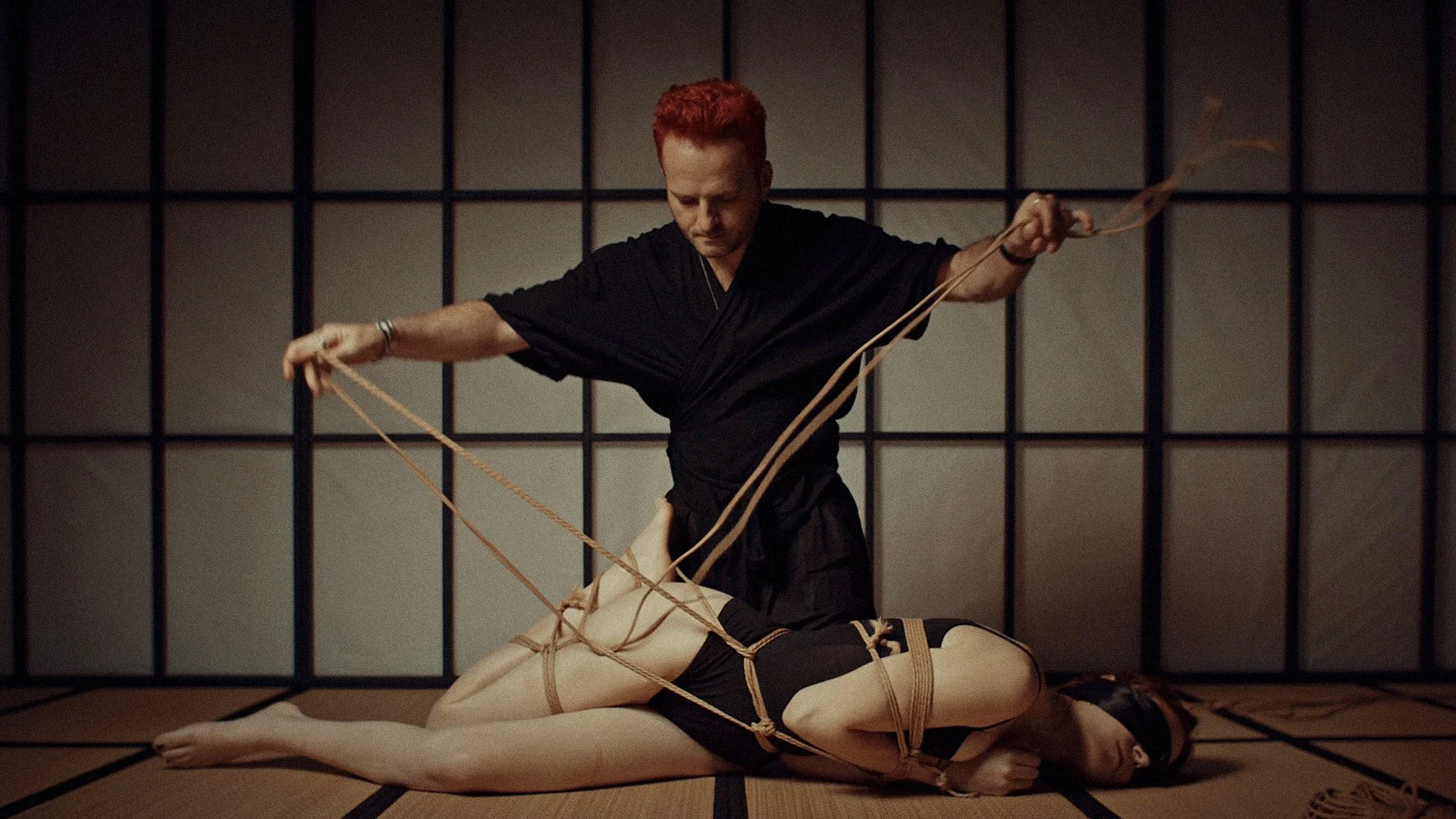
Photo of Dan Carabas and Model Dorcara, shot at Shibari Studio Berlin.
Ready to go deeper in a privat setting?